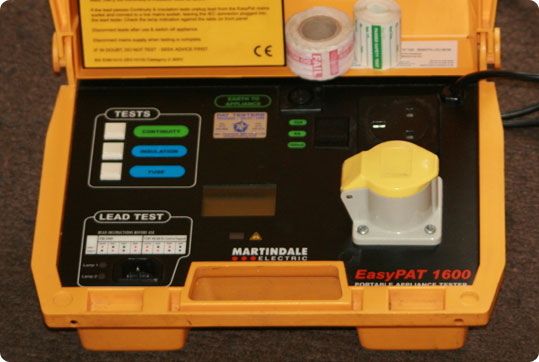
Top 10 Tips For Assessing The Qualifications Of Technicians For PAT in Rugeley
Competence is the most important factor to transform an unmechanical procedure, Portable Appliance Testing (PAT) into a reliable and legally-defendable security system. In the UK specifically, in the Electricity at Work Regulations, 1989, testers of PAT do not require an official license or other legally recognized qualifications. Regulation 16 states instead that the person must possess the "technical experience or knowledge" required to avoid injuries and risk. The duty holder's (employer's) obligation is to select and appoint competent technicians with the combination of formal education, experience and sound judgment. Since there is no requisite certification, the market offers a range of different capabilities. This makes it important for employers to understand the methods to verify the skills of a technician go beyond just a certificate. A trained technician knows the principles of electrical safety, is able to discern results accurately, and make informed decisions about pass/fail by using the IET Code of Practice and provide valuable information on risk assessment.
1. The EAWR 1989 definition of competence in Rugeley
Regulation 16 of 1989's Electricity at Work Regulations define the legal requirement. It states that persons must have competence to prevent injuries and risk. HSE defines competence as the capacity to complete an activity in a safe and efficient way without putting themselves or anyone else at risk. It is comprised of three elements that are required: electrical knowledge, experience in the field and understanding of the system. To be legally competent the technician must possess all three.
2. Formal Qualifications and Demonstrable Skills in Rugeley
There is no lawful requirement that a qualification be acquired. However, formal training will provide the most concrete evidence of knowledge. City & Guilds' 2377 qualification ("In Service inspection and testing of Electrical Equipment"), is the standard industry-recognised. But the mere possession of a certificate will not guarantee competence. It is necessary to be able to apply it in conjunction with real-world knowledge. Dutyholders should be looking for both a relevant certificate and evidence of actual knowledge. Technicians who do not have an official qualification will need to prove the existence of extensive experience and knowledge to be considered competent.
3. City & Guilds qualification 2377 explained
City & Guilds' 2377 qualification is an Level 3 qualification which assesses an applicant's knowledge of the IET Code of Practice, and their ability of performing inspections and testing correctly. The qualification is split into two sections namely 237777 (theory multiple-choice test) and 237778(practical evaluation). The complete award proves that the technician was independently evaluated on their knowledge and their practical abilities. The certificate's number is an excellent method of confirming this certificate.
4. Practical Hands-On experience is essential in Rugeley
If a technician isn't able to apply theory, it is of nothing. An experienced technician is able to evaluate various appliances and in various settings. This knowledge allows them to identify subtle faults that novices might overlook and handle equipment that isn't commonly used and efficiently in complex environments like industrial sites or construction sites. Inquiring of a prospective technician or service provider the number of years they have been working in the field and what type of site they usually work on can assist a duty-holder to determine their practical background.
5. Knowledge of the IET Code of Practice for In-Service Inspection and Testing
The IET Code of Practice has become the bible of portable testing of appliances. A qualified technician must not only have a copy but must possess a thorough, practical understanding of its contents. This includes understanding the various categories of equipment, the ordering of inspections and visual tests and how to properly utilize testing instruments. Their ability to understand and apply this guidance correctly is a key indicator of their competence and professionalism.
6. Calibration of Equipment and Understanding Testing Instruments
The technician needs to understand that the accuracy of test results is dependent on the equipment used. They should be aware that the PAT tester needs to be regularly calibrated (typically annually) by a lab accredited by the UKAS to ensure its readings are correct. They should have an authentic certificate of calibration for their device. In addition, they should be able to utilize the device, conduct regular user checks (e.g. test for lead) and understand any results that it gives instead of just logging numbers.
7. Ability to conduct meaningful visual inspections in Rugeley
Visual inspections can identify the presence of at least 90% of faults. A technician who is qualified will pay close attention to this process. They will look over cables, plugs, connectors, casings, and look for any evidence of damage or wear. They are able to correctly wire a plug, including the correct rating for a fuse. Certain testers might not be as skilled and rush through this process, or even abandon it altogether and relying solely on the tester that is electronic.
8. The Interpretation of Results and the Application of Pass/Fail Criteria in Rugeley
The tester's electronic sensor provides readings; the technician provides the judgement. Ability to comprehend the readings within the context of IET Code of Practice pass/fail limitations and the device is a mark of competence. To illustrate, they should be able to discern the point at which a slight increase in resistance to insulation is ok and when a passable reading of earth continuity might indicate latent faults in a specific appliance. Experts with the right qualifications are able to make informed choices.
9. Questions of Insurance and Liability in Rugeley
A competent technician, while not legally required, must be covered by Public Liability Insurance, (e.g. PS2-5,000,000). The client is covered in the event that the technician causes property damage during the testing. The hiring of a skilled technician enhances the duty holder's legal defense. It proves that all reasonable measures were taken to ensure a suitable candidate.
10. Communication Skills and Documentation in Rugeley
A test process that does not have clear and accurate documents is not worth the effort. Technicians who are certified must create detailed, legible asset registers and reports that precisely identify the appliance, document the results of tests and clearly state a pass/fail. They should also be able to effectively communicate with the person in charge, explaining to them the faults they discover and the potential risks involved with them, and the actions necessary (e.g. replacement, repair). Communication plays an important part in the overall safety process. Check out the top electrical equipment testing in Rugeley for site recommendations.
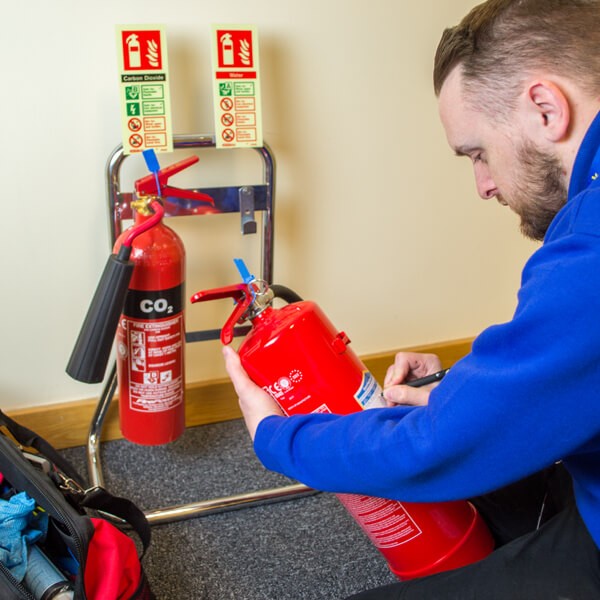
Ten Tips For Regulatory Compliance In The Field Of Fire Extinguisher Maintenance in Rugeley
The UK regulatory framework for fire extinguisher maintenance is a broad system that aims to guarantee equipment reliability and public security through clearly defined legal requirements as well as technical standards and certification schemes. Unlike some safety regulations, which provide broad guidelines, fire extinguisher maintenance follows specific legal guidelines that are outlined in the Regulatory Reform (Fire Safety) Order of 2005, backed by precise technical standards and third-party certified programmes that create a structured compliance PAThway. This multilayered approach puts the direct responsibility of keeping a building in good repair on "the responsible person". It also offers guidelines for showing diligence. Knowing this framework not only helps keep the law in compliance, but also ensures that the equipment used to safeguard lives and property will function as expected in an emergency.
1. The Reform of Regulatory Regulation (Fire Safety) Order 2005 (FSO) in Rugeley
The Fire Scotland Act 2006 and Northern Ireland have similar regulations. Article 17 states that the equipment used to combat fires should "be maintained in a proper routine of maintenance to maintain it in an efficient condition, working in the most efficient manner and in good working order." This responsibility is placed on the "Responsible person" (typically an employer, owner or occupier) and they will be legally responsible for ensuring that all fire safety equipment, including portable extinguishers is maintained in a proper state in good working order, efficient and good repair.
2. British Standard BS 5306-3 (2017)
This standard provides a technical framework to comply with the FSO. It outlines the specific requirements for the commissioning and maintenance of portable extinguishers. It specifies three types of services that are that are available: basic (annual visual inspections and easy checks) as well as advanced (discharge testing and internal inspections every 5 years for water, powder and foam extinguishers) and overhaul (pressure tests and internal inspections every 10 years). Conformance to BS 5306-3 is regarded as the standard for proving a "suitable maintenance program" under the law.
3. Third-Party Certification Schemes (BAFE SP101) in Rugeley
While it's not a requirement, the best method to show due diligence is by using an SP101 BAFE (British Appropriations for Fire Equipment) accredited provider. This scheme of certification, which is accredited by the UKAS, independently validates whether a business meets stringent standards for the expertise of technicians, their work quality, business processes, and equipment. BAFE Certification is accepted as a strong proof to fire authorities, insurers and courts that an organization has met the FSO’s maintenance requirements.
4. Fire Risk Assessments: What's Their role in Rugeley
The Fire Risk Assessment (FRA) is the dynamic document that guides all fire safety decisions that are related to the servicing of extinguishers. It is required to identify the correct fire-fighting equipment, establish its appropriate dimensions, type and Rugeley, and determine the necessary maintenance regimen. FRAs should be regularly reviewed, particularly in the event of a change in circumstances. All modifications made must be included in the schedule for servicing. Service provider reports are helpful in these reviews.
5. Documentation and proof requirements in Rugeley
It is crucial to provide comprehensive documentation in order to demonstrate compliance. A complete report should be provided by the service provider following every service. The report should include details of the company's name, contact information including details of the engineer along with the date and type of service, list of equipment that was maintained, any recommendations or faults found. These documents must always be accessible for inspection by the enforcing authority (Fire and Rescue Services) and insurance companies. Failure to provide proper documentation can result in enforcement action even if servicing was actually carried out.
6. The Mechanisms for Enforcement of Penalties in Rugeley
Local Fire and Rescue Authorities conduct compliance audits and have significant enforcement power. They can issue Alteration Notices, which require changes to fire safety, Enforcement Notices, which require specific improvements within a timeframe and, in the most severe instances, Prohibition notices, which prohibit or shut down a building immediately, for non-compliance. For serious breaches of law, such as ones that could endanger life, the court may issue unlimited penalties.
7. Impacts of Insurance in Rugeley
The majority of commercial insurance policy requirements include the compliance with fire-safety legislation. Insurance coverage could be invalidated due to inadequate servicing records or providers that are not compliant following an incident that is a major fire. Insurance assessors frequently request servicing records during claims processing. They might also request that insurance companies adhere to certain certification standards, such as BAFESP101 to ensure coverage for large commercial or high-risk property.
8. Skills for Technicians in Rugeley
The FSO stipulates that maintenance must be performed by "competent people." While not legally defined, competence generally includes: formal training on BS 5306-3, manufacturer-specific equipment training, practical experience, and understanding of relevant regulations. Third-party certification schemes such as BAFE SP101 give the best assurance of technician proficiency through regular assessments and audits.
9. Environmental Compliance in Rugeley
Environmental laws govern the correct disposal of extinguishers that are no longer in use and other trash. This includes, in particular, the Environmental Protection Act (1990). Registered waste carriers must offer Waste Transfer Notes. Responsible persons must ensure that the provider they choose is following all legal requirements. They are ultimately responsible for disposing of their waste. They may also be penalized for failing to do this.
10. The frequency and scope of requirements for service in Rugeley
The time frame for service specified by BS 5306-3 must be adhered to: annual basic service for all extinguishers, extended maintenance every five years for foam, powder and water types and overhauls every 10 years for CO2 units. Furthermore, the responsible person must ensure that the monthly inspections are carried out by the staff (often). The inspections are required to identify obvious issues like the loss, obstruction, or damage of pressure. This combination between professional servicing and user inspections is the basis for a maintenance plan. Take a look at the best Rugeley fire extinguisher servicing for blog tips.